Supper in the Indus City: Reading Mohenjo-daro's Meals from Seeds, Bones, and Soot
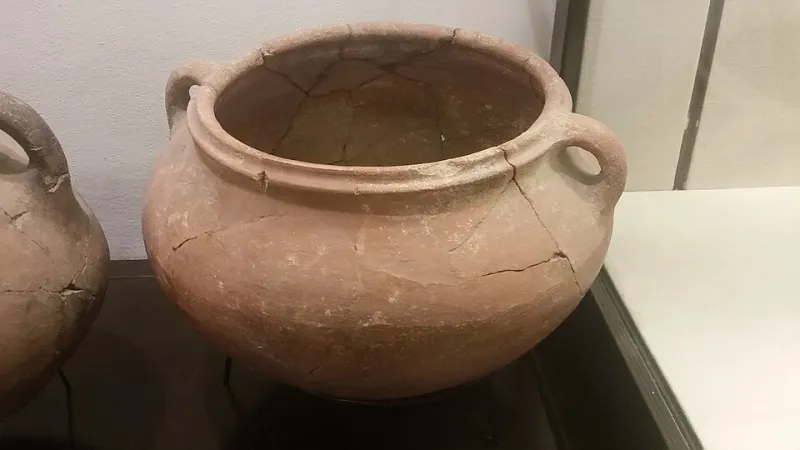
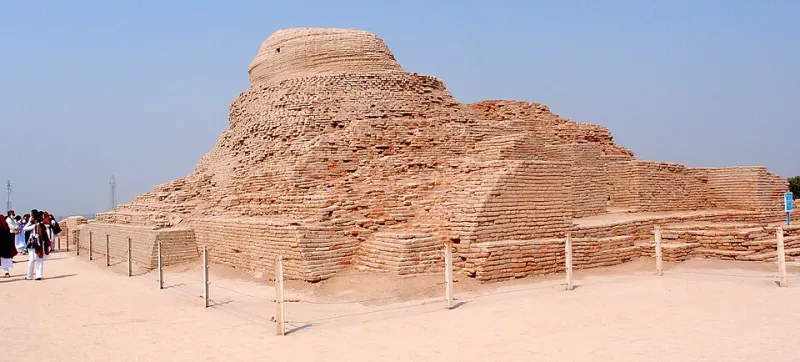
Photo: Hanay, CC BY-SA 3.0, via Wikimedia Commons
Ask a visitor what they know about Mohenjo-daro and the answer is usually monumental: the grid streets, the Great Bath, the drainage channels that still look engineered for a modern city. Ask what the residents had for dinner, and the conversation tends to stop. Yet the most intimate question we can put to the past may also be the most revealing. Food is not a footnote to urban history; it is the machinery that keeps a city running. At Mohenjo-daro, the evidence for that machinery survives in the humblest places — in scorched seeds swept into a corner, in bone fragments behind a courtyard wall, in the blackened base of a clay pot.
The Evidence Is Mostly Refuse
There is an irony built into the archaeology of food: we learn the most about ancient meals from what was thrown away, spilled, or burned. A pot shattered on the floor is a household disaster; a pot shattered on the floor five thousand years ago is a gift to scholarship. Grains that charred in a cooking accident resist decay in ways that grains eaten at breakfast never can, which means the Indus pantry we can reconstruct is skewed toward the foods that survived mishandling and fire.
Mohenjo-daro itself poses special difficulties. Its early twentieth-century excavation, its brackish groundwater, and its salt-laden soils all took a toll on organic remains, and much of the site was dug before flotation — the water-separation technique that now recovers tiny seeds and chaff from soil samples — became standard practice. For that reason, specialists reconstructing Indus diet lean heavily on better-preserved sites in the same cultural world, above all Harappa, along with Farmana, Rakhigarhi, and Kanmer. What emerges is not a Mohenjo-daro menu in the strict sense, but something close: the culinary repertoire of the civilization to which the city belonged.
The Grain Basket
Barley and wheat dominate the Indus archaeobotanical record, with barley frequently appearing in greater quantity. Both were grown in the surrounding plains and processed within the city. Alongside the cereals, excavators and paleoethnobotanists have recovered lentils, field peas, chickpeas, and sesame, together with evidence for dates and a limited range of fruits. Cotton was cultivated too, though its fiber rather than its food value made it famous.
What did that mean at the level of the hearth? A household jar might hold hulled barley for porridge or coarse bread, lentils for a thick stew, and sesame for oil. Grinding stones known as saddle querns, paired with handheld mullers, turned up in room after room at Mohenjo-daro — heavy, utilitarian objects that were not casually moved. Their presence in a space is one of the strongest clues that grain processing happened right there, not somewhere down the street.
Meat, Dairy, and the Question of the Butcher
Animal remains from Mohenjo-daro and its sister sites point to cattle, water buffalo, sheep, goat, and pig, with fish and birds filling out the tally. Wild game appears as well, indicating that hunting had not vanished from urban life. The relative proportions of these animals tell a story about strategy rather than mere taste: cattle and buffalo provide traction and milk as well as meat, so a household that slaughtered one was making a significant decision, not a routine one.
Cut marks on bones record butchery, and the distribution of skeletal elements across a site can suggest where animals were killed, divided, and consumed. Residue analysis of pottery has added another line of evidence, with several studies identifying dairy fats absorbed into Indus vessels — a finding that has been read as support for milk processing, though the interpretation remains under discussion. Whether that dairy arrived as fresh milk, curd, or clarified butter is the kind of question that pottery can raise far more easily than it can settle.
Pots That Record Their Own Use
The Indus ceramic assemblage is a working toolkit, and much of it is plain. Coarse red wares with soot-blackened exteriors are the standard candidates for cooking vessels; their globular shapes suit simmering and would have sat comfortably on a hearth or among embers. Larger storage jars, some tall enough to stand at shoulder height, speak to the domestic economy of surplus — grain and oil kept against the lean months. Perforated jars are more enigmatic, variously proposed as strainers, cheesemaking equipment, or something else entirely.
Fuel, too, is part of the recipe. Charcoal assemblages indicate a reliance on local woods, with dung and crop residues likely filling gaps in supply. In a city of brick and timber, every meal consumed a small budget of energy, and someone had to gather it.
Who Did the Cooking?
The layout of Mohenjo-daro's houses — rooms opening onto courtyards, with wells and drains serving clusters of dwellings — suggests that much of life was shared rather than fully private. Hearths, grinding stones, and cooking pottery cluster in particular rooms and courtyards, but assigning a single function to a space is risky; rooms are reused, and a storage corner becomes a workshop becomes a kitchen over a generation.
As for who stood at the quern, the honest answer is that the artifacts do not say. Ethnographic comparison with South Asian villages has often pointed toward women as the primary grinders and cooks, and skeletal evidence of repetitive strain has been invoked in support. These arguments are suggestive, not conclusive. What the material record does establish is that feeding an Indus household consumed real labor — hours of grinding, water carried from a well, fuel collected, fires tended.
From Field to Kitchen
Every ingredient in an Indus pot arrived by way of a network. Sesame and cotton point toward the agricultural hinterland; fish toward the river and its channels; copper and semi-precious stones moving through the same routes remind us that the city was a hub long before its food reached the table. Storage capacity at Mohenjo-daro implies management of surplus, and surplus implies decisions about who ate what, when, and how much — questions that shade into economics and social hierarchy.
An Indus Kitchen, Revisited
A useful experiment in empathy is to stand in a modern American kitchen and remove everything that arrived after the Industrial Revolution: the refrigerator, the gas range, the food processor, the plastic packaging. What remains — a clay pot, a fire, a stone for grinding, a covered jar of grain — is not so far from the working equipment of Mohenjo-daro. The parallel is not exact, but it clarifies how much of daily life is shaped by the ordinary technologies of food.
The quern and the tandoor also survive in modified form in contemporary South Asian kitchens, where flatbreads are still cooked on hot surfaces and lentils still form the backbone of the daily meal. Continuity of that kind should be invoked carefully, since five thousand years is a long time and cultures change, but it offers a human scale to the archaeological record.
What the Kitchen Leaves Open
We do not know what an Indus cook called a lentil, whether meals were taken individually or communally, or whether festival days looked different from ordinary ones. The evidence is silent on flavor — no recipe, no menu, no spice list written down. What we can say is that the kitchens of Mohenjo-daro were busy, well supplied, and embedded in networks that stretched far beyond the city walls. The next time a visitor admires the drainage channels, it is worth adding a thought for the cooks whose fires made all that engineering worth building.