Cubes of Certainty: How Mohenjo-daro's Chert Weights Standardized an Ancient Economy
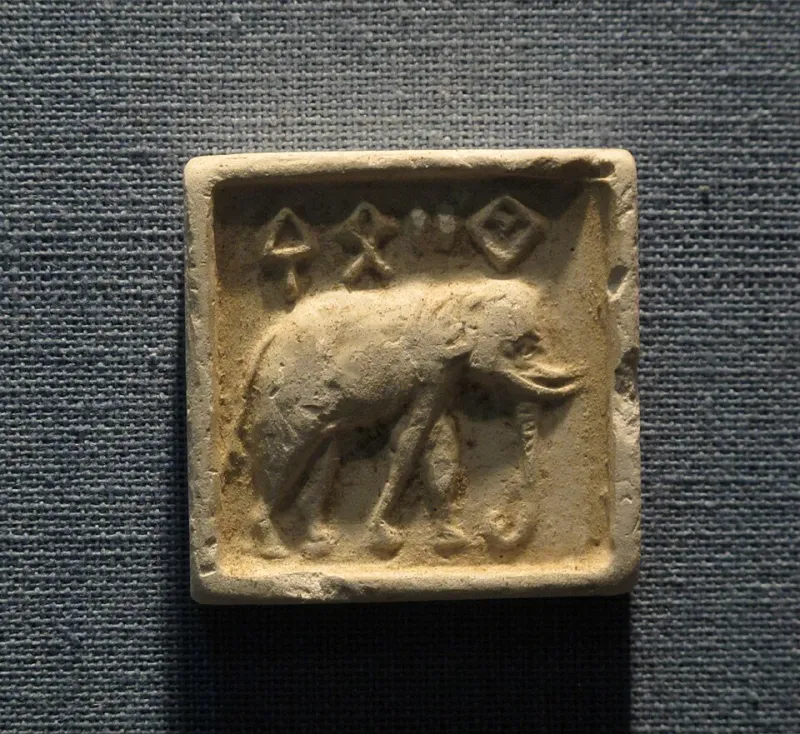
Photo: Ismoon (talk) 11:17, 22 February 2012 (UTC), CC0, via Wikimedia Commons
A five-gram cube does not look like an instrument of empire. It fits in a child's palm, weighs about as much as a modern US nickel, and bears no royal portrait or proclamation. Yet at Mohenjo-daro, thousands of such cubes were cut from chert, a hard, silica-rich stone, and finished to masses that fit a shared numerical system. In a city without a clearly identified king or standing army, these small objects helped hold an economy together.
The weights are not merely tools of convenience. They are evidence of an early standards bureau, one without a building, a director, or a published manual. The standard lived in the stones themselves and in the practices of the people who checked, carried, and trusted them.
A Standards Bureau Without a Building
Mohenjo-daro, like other Indus cities, has yielded cubical weights in substantial numbers. Archaeologists have found them in workshops, residential areas, and port-related contexts, and related examples appear across the wider Indus world, from Harappa to Lothal and Dholavira. The geographic spread matters. A weight that matched a known standard in one settlement could be recognized in another, even hundreds of miles away.
That consistency did not require a central office as modern administrators would understand one. It required agreement, repetition, and a way to check one stone against another. The finest weights are small, carefully shaped, and remarkably uniform in their proportions. Some examples are little more than a few grams; others reach several kilograms. The smallest are often compared to the mass of a modern nickel, though many are lighter.
No surviving Indus text explains the system. The script remains undeciphered, so scholars reconstruct the rules from the objects themselves: their masses, their ratios, and their distribution across sites. The picture that emerges is not random. It is a designed series, and that design is the real artifact.
The Logic of the Ratios
Indus weights are often described as following a mixed ratio system. At the small end, the masses tend to double: 1, 2, 4, 8, 16, 32, and 64. At the larger end, the series shifts toward larger multiples, with denominations such as 160, 200, 320, and 640 commonly reported. The exact absolute values vary among surviving examples, but the relationships are consistent enough to indicate a shared convention.
Why use ratios at all? A doubling sequence makes practical sense when a merchant needs to scale a transaction up or down without inventing a new unit. If a small cube represents one unit, a larger cube can represent two, four, or eight. The system is easy to teach, easy to check, and easy to adapt to goods of different value. The larger multiples allow for bulk transactions without requiring dozens of tiny stones on a scale pan.
Chert was a sensible material for the job. It is hard, durable, and resistant to the wear that would gradually alter a softer stone's mass. A chert cube could be handled for years and still remain close to its original weight. The choice suggests that the people who made these objects understood a basic principle of metrology: a standard is only useful if it stays stable.
Trust, Seals, and the Machinery of Trade
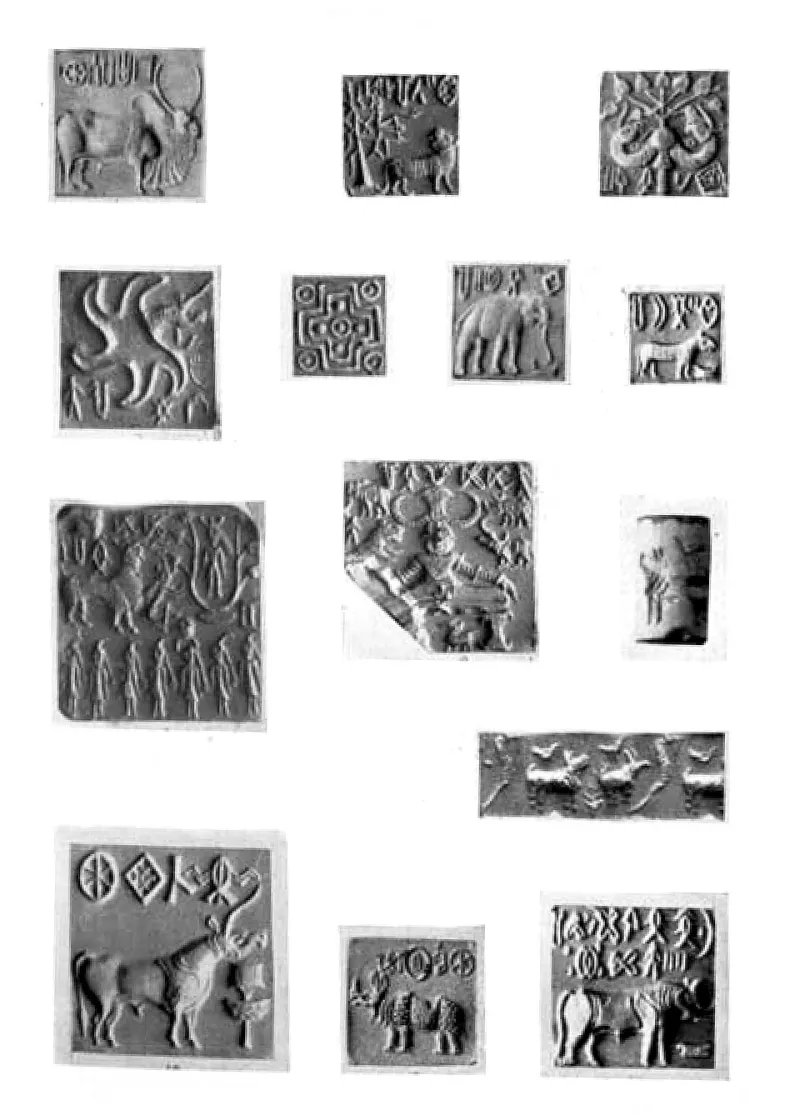
Weights do not trade on their own. They work alongside other instruments of trust. Indus seals, with their carved animals and undeciphered signs, appear in workshop and port contexts and likely marked ownership, authorization, or quality. A sealed package and a standardized weight together told a buyer something important: this quantity is what it claims to be, and someone stands behind it.
The Indus economy reached beyond the subcontinent. Mesopotamian texts refer to a place called Meluhha, widely associated with the Indus region, as a source of carnelian, ivory, timber, and possibly cotton. Indus-style beads and other goods have been found in Mesopotamian contexts. Direct voyages between Mohenjo-daro and Mesopotamian ports are difficult to prove, but the direction of trade is not in doubt.
For long-distance trade, a shared weight system reduced friction. A merchant in a distant port did not need to know the streets of Mohenjo-daro or the names of its officials. A cube that matched the expected mass carried its own recommendation. It was a small, portable argument for reliability.
Quality Control in a Bronze-Age Key
The absence of a written manual has led to speculation about who enforced the standard. Was it a temple authority, a merchant guild, a workshop tradition, or a combination of all three? The evidence does not permit a confident answer. What can be said is that the standard was reproduced across a large area and over a long period, which implies some mechanism of oversight or shared training.
That mechanism may have been less formal than a modern bureau. Apprentices learned by watching. Master weights served as references. A merchant could compare a suspicious cube against a trusted one. The system did not need a bureaucracy in every town; it needed enough people to care about the difference between a close match and a true one.
In this sense, the weights resemble modern quality-control practices more than they resemble a government office. A factory does not need a regulator standing at every bench if its workers and managers share a standard and have tools to verify it. The Indus system likely worked through a similar combination of habit, training, and practical checking.
Why Tiny Cubes Still Matter
Modern readers have their own reasons to appreciate the problem. Anyone who has assembled flat-pack furniture with a mismatched screw, or noticed a package that shrank while its price held, understands the frustration of broken standards. In the United States, the National Institute of Standards and Technology maintains the reference standards that keep commerce coherent, while international bodies such as ISO coordinate practices across borders. The machinery is more elaborate today, but the underlying need is ancient.
Mohenjo-daro's chert cubes are not glamorous. They are not as striking as the Great Bath or as mysterious as the seals. But they reveal a city that understood something fundamental: measurement is a social contract. A weight is only useful when people agree to treat it as true. The cubes of certainty are small, but the agreement they represent is large. In Mohenjo-daro, standardization was not a technical afterthought. It was part of the infrastructure of trust.