Before Rome Flushed: The Hydraulic Genius Hidden Beneath Mohenjo-daro's Streets
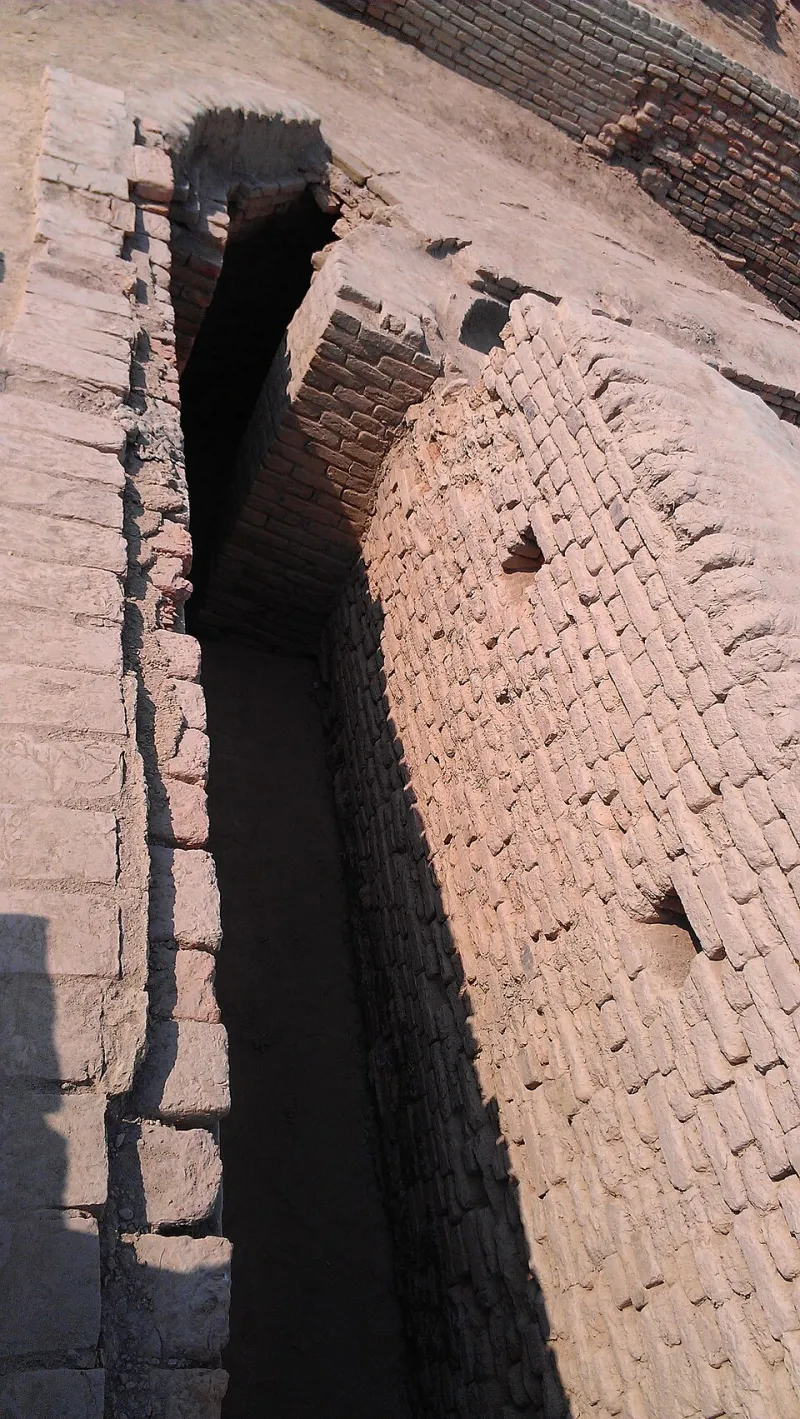
Photo: Quratulain, CC BY-SA 3.0, via Wikimedia Commons
A City That Smelled Better Than Rome
Ask an American student to name the ancient civilization most famous for plumbing, and the answer will almost always be Rome. The aqueducts, the public baths, the cloaca maxima — Roman sanitation has been celebrated for centuries as a peak of classical engineering.
But here is what rarely makes it into the textbook chapter: more than two thousand years before Rome reached its hydraulic height, the builders of Mohenjo-daro were already constructing covered drains, household soakage pits, and a waterproofed public bathing tank of remarkable sophistication. Around 2500 BCE, this city in the Indus Valley — in what is now Sindh province, Pakistan — was quietly running the most advanced sanitation network the ancient world had yet seen.
The Great Bath: A Bronze Age Municipal Pool
Dominating the highest district of the city, the structure archaeologists call the Great Bath is hard to overstate. It is a sunken tank measuring roughly 12 by 7 meters, lined with tightly fitted bricks set in gypsum mortar, sealed beneath by a thick layer of natural bitumen — a waterproofing technique that would not look out of place in a modern parking garage. Two broad staircases, one at each end, led bathers down into water that was likely drawn from a large adjacent well.
Corridors ring the tank, and a series of small private rooms along its northern edge suggest the complex served people who changed, prepared, or rested before entering the water. A large well nearby, along with evidence of a possible heating arrangement in an adjoining chamber, has led some researchers to propose that the bath could be refilled — and perhaps even warmed — on demand.
Was It Ritual or Recreation?
The honest answer from the archaeological record is that we do not know for certain, and that uncertainty is itself instructive.
The prevailing interpretation holds that the Great Bath served a ceremonial or ritual-cleansing purpose. Several features support this reading: its location within the elevated citadel mound, the scarcity of comparable private bathing facilities at such scale, and the fact that the tank's design prioritizes controlled, communal access rather than casual use. Water holds deep symbolic significance in South Asian religious traditions, and many scholars see the Great Bath as an early expression of ideas about purity that echo through later Indian practice.
Yet the surrounding city complicates a purely ritual explanation. If bathing were only a sacred act reserved for the elite, why did ordinary households invest in private bathrooms and drains? The most defensible conclusion is that Mohenjo-daro's residents regarded cleanliness as both a spiritual and a practical matter — a fusion of belief and public health that modern Americans might recognize in the way we treat hospitals as places of both healing and strict hygiene protocol.
The Drains That Made Headlines
The Great Bath may be the showpiece, but the true engineering triumph of Mohenjo-daro runs invisibly beneath its streets.
Nearly every house in the excavated portions of the city connected to a municipal drainage system. Wastewater from kitchens and bathrooms flowed through covered channels — often built with brick and fitted with removable cover slabs that allowed maintenance crews to clear blockages, an ancestor of the utility access panel. Many drains sloped steadily toward collection points outside the city walls, and household latrines frequently emptied into brick soakage jars or cesspits rather than directly into the streets.
Consider what that means in practice. A visitor walking the main avenues of Mohenjo-daro around 2400 BCE would not have waded through open sewage, as residents of many later and larger cities did. Compare that with Paris in the Middle Ages, or even with nineteenth-century American cities like Chicago, where cholera outbreaks driven by contaminated water killed thousands and directly inspired the construction of modern sewer systems. Mohenjo-daro arrived at a version of that public-health insight roughly four thousand years earlier.
How Did They Do It Without a Blueprint?
One of the most striking features of the Indus Valley Civilization is the absence of grand monuments to individual rulers. Archaeologists have found no royal palaces, no triumphant statues, no kingly tombs. Instead, the evidence points toward a culture — whatever its governance looked like — that invested collectively in infrastructure.
Standardized fired bricks, produced in a consistent ratio across hundreds of settlements, suggest coordinated planning and shared technical knowledge. The uniformity of drainage connections from house to house implies municipal oversight, or at minimum a powerful civic norm. Whoever organized these projects, they operated on a scale that required consensus, resources, and long-term commitment — the same ingredients behind any modern municipal bond measure on an American ballot.
What Mohenjo-daro Teaches Us Today
For students of history and engineering alike, the lessons of Mohenjo-daro are surprisingly contemporary.
First, sanitation is a choice. The city's leaders prioritized water management at a time when most of humanity did not, and that priority shaped urban life for everyone, not just the powerful. Second, infrastructure outlasts ideology. We remember Mohenjo-daro not for its kings or conquests, which appear to have been few, but for its pipes and bricks. Third, ancient does not mean primitive. The bitumen sealant, the maintenance-friendly drain covers, and the bituminous waterproofing of the Great Bath demonstrate problem-solving that any modern civil engineer can appreciate.
The next time you turn a tap or flush a toilet, it is worth pausing on the long, largely forgotten lineage behind that convenience. Rome deserves its reputation. But the Bronze Age engineers of Mohenjo-daro were there first — and in some respects, they did it with a civic-mindedness that cities today are still trying to match.