The Seals Still Keep Their Counsel: Machine Learning and the Unread Indus Script
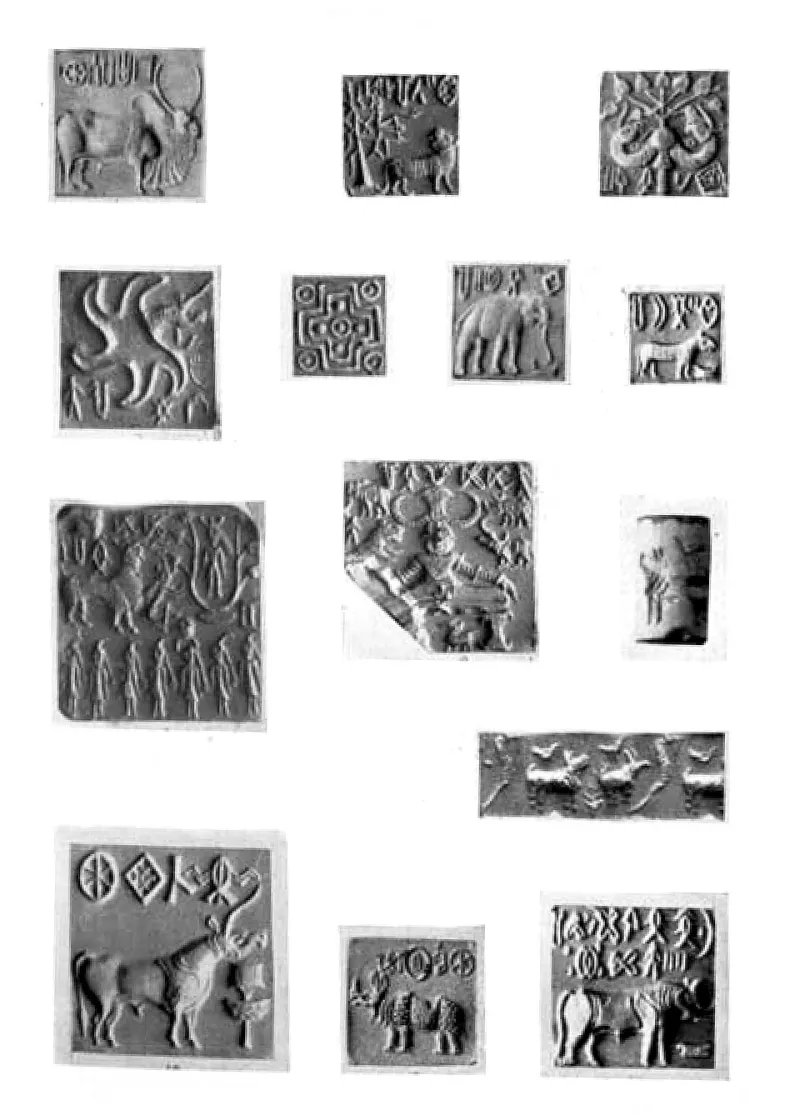
Photo: Ernest John Henry Mackay (5 July 1880 – 2 October 1943), Public domain, via Wikimedia Commons
At Mohenjo-daro, the most eloquent objects are often the smallest. Seals and seal impressions bearing compact strings of signs sit in museum drawers and excavation reports by the thousand. Each impression once pressed authority, ownership, or obligation into clay. Each sign sequence looks tantalizingly orderly. Yet the Indus script remains unread, and every few years a new claim of decipherment arrives only to fade under scholarly scrutiny. In 2026, the newest claimant is not a lone epigrapher with a notebook but a cluster of machine-learning methods trained on photographs, drawings, and three-dimensional scans of these ancient objects.
The appeal is obvious. Artificial intelligence has transformed fields that depend on pattern recognition, from genomics to satellite archaeology. Why should the Indus script be different? The answer lies less in the sophistication of the algorithms than in the character of the surviving evidence. Mohenjo-daro's seals may be numerous, but they are not verbose. They are administrative instruments, not archives of prose, and their brevity places hard limits on what any computational method can infer.
A Corpus Too Small for a Very Large Model
Modern language models perform best when they can ingest billions of words. The Indus corpus is measured in thousands of inscribed objects, and most inscriptions contain only a handful of signs. Many are shorter than a modern address label. The texts are also unaccompanied by a bilingual key, the kind of parallel translation that allowed scholars to unlock Egyptian hieroglyphs through the Rosetta Stone. Without a known language written in the same script, or a substantial body of long texts, even an excellent model has little material from which to learn grammar, vocabulary, and sound values.
This is not a failure of computing power. It is a problem of evidence. A model can detect that certain signs tend to appear at the beginning or end of inscriptions. It can cluster signs that occupy similar positions. It can estimate whether a sequence looks more like a name, a title, or a commodity label. But statistical regularity is not the same as meaning. A pattern may reflect scribal convention, material constraint, or the shape of the object rather than the syntax of a sentence.
What the Seals Actually Preserve
The objects themselves offer important context. Indus seals often carry animal motifs and short sign sequences. Seal impressions on clay show how those designs were used to mark goods, packages, or administrative transactions. Copper tablets, pottery graffiti, and ivory rods add further examples, but they do not supply the long narrative texts that decipherment usually requires. The surviving corpus looks less like a library and more like a filing system whose labels have survived while the files have vanished.
That administrative character is precisely what makes the script historically important. If the signs record names, titles, kinship terms, commodities, or ritual formulas, then reading them would illuminate how Mohenjo-daro organized production and exchange. It would also test long-standing hypotheses about trade with Mesopotamia, where texts mention a land called Meluhha. But the seals do not offer an easy entry point. Their brevity means that a plausible reading of one sign sequence can rarely be checked against dozens of parallel passages.
Where Machine Learning Can Genuinely Help
Computational methods are not useless simply because decipherment remains out of reach. They can assist in several concrete ways. First, computer vision can catalog seal impressions more systematically than human teams working at speed. Algorithms can match duplicate seals, identify damaged signs, and compare impressions held in different museums. Three-dimensional scanning can reveal details invisible in older photographs, including faint traces of wear and overlapping impressions.
Second, sequence models can describe the script's internal structure. Researchers can test whether certain signs form recurring pairs, whether sign order follows consistent rules, and whether the corpus contains statistical signatures that resemble known writing systems. Such work does not read the script, but it can narrow the field of plausible hypotheses and expose claims that depend on selective examples.
Third, network analysis can connect inscriptions by motif, material, provenance, and sign combination. If a particular sequence appears only on seals from a specific neighborhood or craft area, that association may point toward administrative function even before the signs are read. These are modest gains, but they are real. They treat AI as a laboratory instrument rather than a translation machine.
The Danger of a Confident Guess
Machine learning is exceptionally good at producing fluent, plausible outputs. That is a liability in decipherment. A model trained to predict the next sign can generate sequences that look like a reading, and a researcher eager for a breakthrough may mistake coherence for correctness. The history of Indus studies includes many ingenious proposals, but a decipherment must satisfy demanding tests. It must account for the entire corpus, not a chosen subset. It must yield consistent grammar and credible names. It must survive independent scrutiny by epigraphers, linguists, and archaeologists.
AI can help generate hypotheses, but it cannot certify them. The decisive work remains comparative and evidentiary: new excavations, better recordings of known objects, and careful publication of context. A computational result that cannot be tied to an archaeological setting or an epigraphic argument is fragile, however elegant its mathematics.
Why Reading the Seals Would Change Mohenjo-daro
Decipherment would not merely satisfy curiosity. It would alter the city's history from the inside. Administrators, artisans, merchants, and possibly ritual specialists would become visible through their labels and titles. The seals could reveal what Mohenjo-daro counted, stored, sent, and received. They might clarify whether the city's apparent uniformity in weights, bricks, and street plans was matched by a shared administrative vocabulary. They could also give substance to debates about language, ethnicity, and mobility in the Indus world.
For American students encountering Mohenjo-daro through museum displays and online tours, the unread script is a useful corrective to the idea that ancient cities are fully known. The seals are not a locked door with a single missing key. They are a fragmentary archive whose silence has survived every generation of scholars. Machine learning may eventually help us ask better questions of that archive. It will not answer them by itself.
As of 2026, no verified decipherment exists. The most responsible computational work is therefore not a race to announce a translation but a patient effort to make the corpus more legible, more comparable, and more available. If the Indus script is ever read, the breakthrough will likely come from a combination of excavation, philology, and computational pattern-finding, each keeping the others honest. The seals have kept their counsel for four and a half thousand years. They will not surrender it to an algorithm alone.