No Throne in the Citadel: How Mohenjo-daro Organized Power Without a King
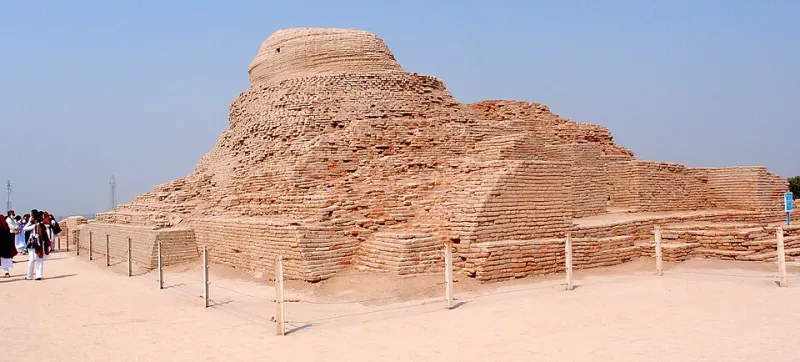
Photo: Saqib Qayyum, CC BY-SA 3.0, via Wikimedia Commons
A City That Does Not Announce Its Ruler
Ancient cities are often introduced through their monuments to power: a palace gate, a royal tomb, a temple platform, a king's inscription. Mohenjo-daro, one of the great urban centers of the Indus Valley Civilization, frustrates that familiar script. Its streets are laid out with striking regularity, its bricks follow standardized proportions, and its drainage systems are sophisticated enough to impress modern engineers. Yet after more than a century of excavation, no structure has been conclusively identified as a royal palace, and no towering temple comparable to the ziggurats of Mesopotamia or the temples of Egypt has emerged from the ruins.
That absence is not merely a gap in the evidence. It is a historical problem in its own right. For students raised on stories of pharaohs and emperors, Mohenjo-daro raises an uncomfortable question: can a complex, densely settled, highly organized city function without a clearly visible sovereign? The search for an answer has pushed archaeologists and historians to reconsider what power looked like in the ancient world.
The Expectation of a Palace
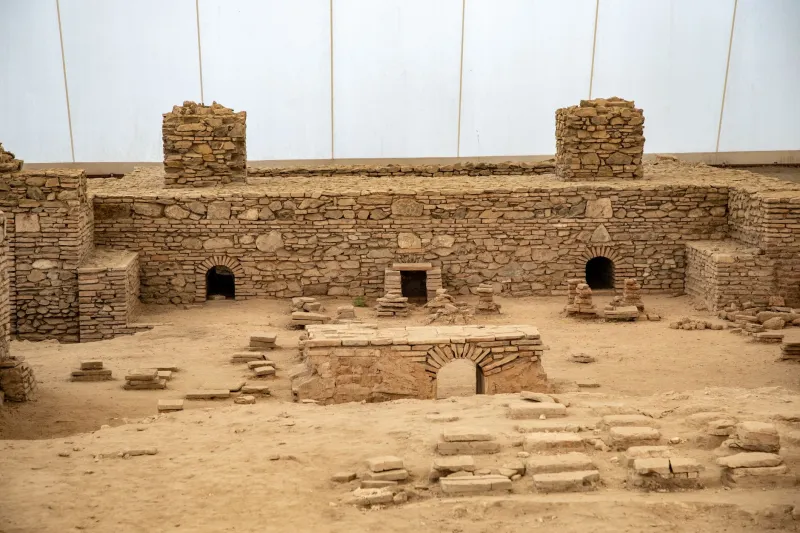
Early excavators at Mohenjo-daro brought with them a mental template shaped by the archaeology of the Near East. In Mesopotamia, royal palaces, temple precincts, and dynastic inscriptions made kingship visible. In Egypt, tombs and monuments celebrated the ruler's central place in the cosmic order. When archaeologists encountered Mohenjo-daro's Citadel mound and its monumental structures, they naturally looked for equivalents.
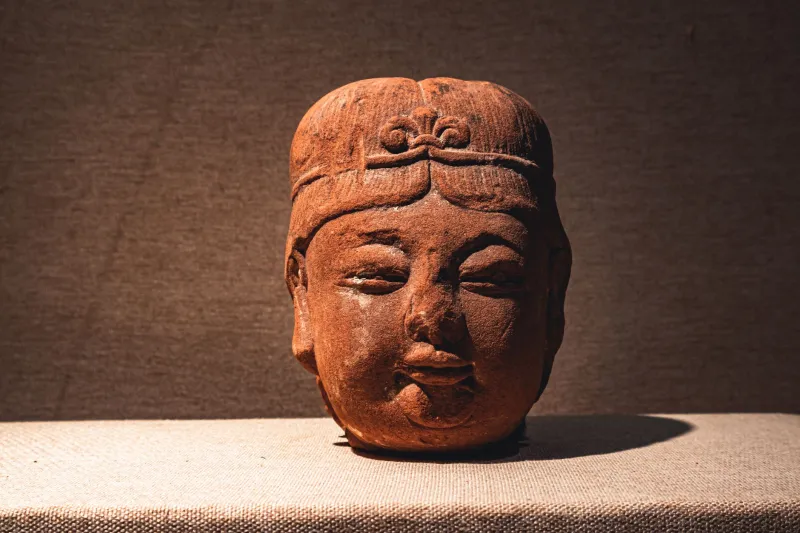
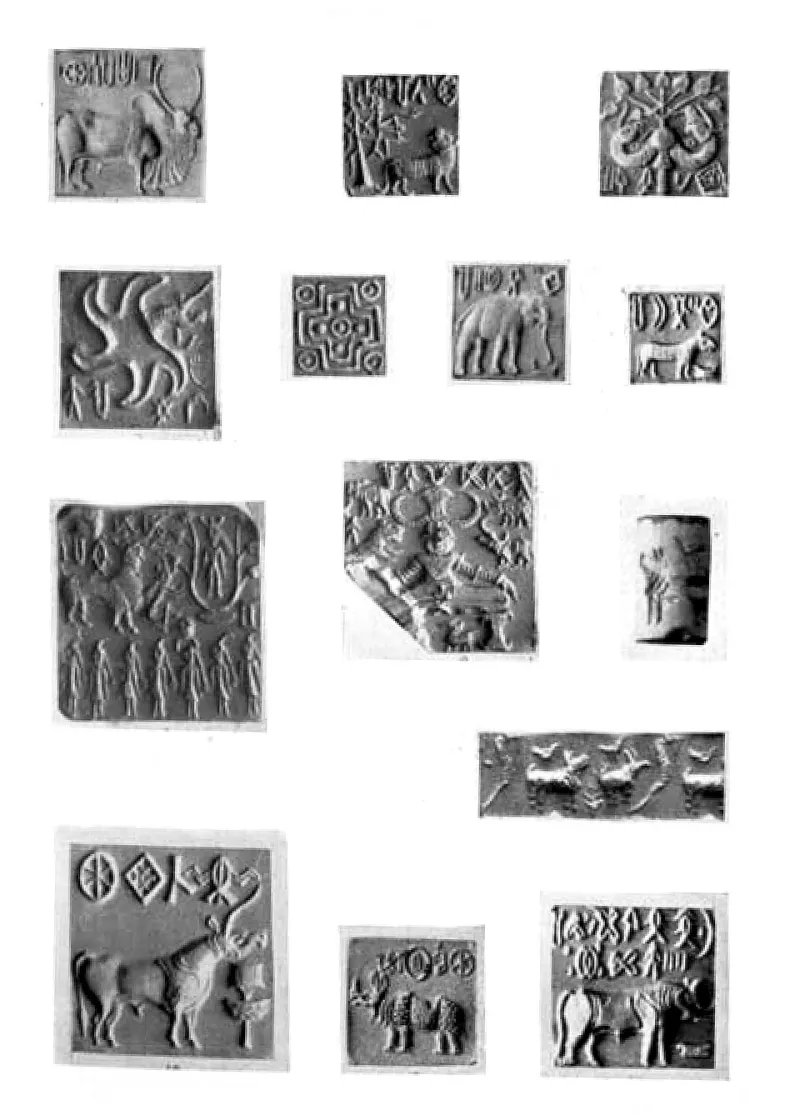
The results were ambiguous. The so-called Great Bath has been interpreted as a ritual pool, a public cistern, or a ceremonial center, but no consensus identifies it as a royal or temple installation. The structure often labeled a granary remains disputed. The famous steatite figurine known as the 'Priest-King' is a modern nickname, not an ancient title; it may depict an elite figure, but it does not prove the existence of a monarchy. Nor have excavations produced royal tombs filled with treasure, royal seals naming a dynasty, or monumental inscriptions celebrating conquests. The Indus script remains undeciphered, and its surviving examples are short, often appearing on seals and small objects rather than on palace walls.
What the City Does Show
What Mohenjo-daro does show is coordination. Bricks were made to a consistent ratio of roughly 1:2:4, suggesting shared standards across a wide region. Streets and lanes followed a grid, with neighborhoods served by wells and covered drains. Standardized weights and measures point to regulated commerce. Seals with animal motifs and script were used in trade and administration. These are not the traces of a city without order. They are the traces of a city with rules, shared expectations, and institutions capable of enforcing them.
The question is where authority resided. Coordination can come from a palace, but it can also come from councils, guilds, kin groups, neighborhood associations, or ritual specialists. In recent decades, scholars have increasingly argued that the Indus cities are better understood through models of distributed or collective power rather than through a single royal apex.
Heterarchy and the Case for Distributed Authority
One influential framework is heterarchy, a concept developed in anthropology and archaeology to describe systems in which power is spread across multiple, sometimes overlapping, hierarchies rather than concentrated at one summit. In a heterarchical city, merchants, craft specialists, ritual practitioners, and local councils might all wield authority in different domains. No single institution monopolizes decision-making.
Applied to Mohenjo-daro, heterarchy helps explain how a city could maintain standardized bricks and extensive drains without a visible royal bureaucracy. Different groups may have negotiated shared standards because they served common interests. Craft guilds might regulate production. Merchant networks might enforce commercial norms. Neighborhood groups might manage local water and waste systems. The result would be a city that looks planned without necessarily being planned from a throne.
This does not mean Mohenjo-daro was egalitarian. Evidence for differences in housing, access to resources, and burial treatment suggests social inequality existed. But inequality does not require a king. Power can be unevenly distributed among elites without being crowned.
Merchants, Councils, and the Machinery of Trust
Trade offers another window into governance. Indus seals and standardized weights appear across a wide network stretching toward Mesopotamia and the Persian Gulf. Long-distance commerce requires trust, contracts, and enforceable norms. Some scholars have suggested that commercial elites played a significant role in civic life, perhaps through councils or guild-like organizations. Such bodies could have coordinated infrastructure, resolved disputes, and represented the city's interests without a royal court.
The absence of monumental royal propaganda may also reflect a political culture in which authority was expressed through restraint, ritual purity, or consensus rather than through displays of personal grandeur. The Great Bath, whatever its precise function, hints at communal or ritual activity on a civic scale. But ritual authority need not belong to a king; it can be distributed among priests, lineages, or specialist groups.
Why the Absence Still Troubles Us
Mohenjo-daro's missing palace unsettles because it challenges a narrative deeply embedded in Western education: that complex civilization naturally produces kings, temples, and monumental hierarchies. American textbooks often present the rise of civilization as a sequence of rulers, dynasties, and empires. Mohenjo-daro offers a different possibility, one in which urban complexity emerged alongside forms of authority that are harder to see in the archaeological record.
At the same time, caution is warranted. Absence of evidence is not always evidence of absence. A palace may lie unexcavated. Administrative buildings may have been misidentified. Royal authority may have been expressed in perishable materials or in ways that left little trace. The Citadel mound contains monumental structures whose functions remain debated. The most defensible conclusion is not that Mohenjo-daro definitely had no king, but that no clear archaeological signature of kingship has yet been found.
Rethinking Power at Mohenjo-daro
The search for Mohenjo-daro's rulers is therefore more than a hunt for a missing building. It is a debate about how power can be organized, how cities can cohere, and how archaeology should interpret silence. As virtual tours and digital reconstructions make the city's streets and drains more accessible to students and history enthusiasts, the puzzle of its governance remains central to its fascination. Mohenjo-daro may have had a king whose traces have vanished, or it may have been governed by a more collective and distributed set of institutions. Either way, the city invites us to look beyond the throne and ask how authority actually worked in the lives of its residents.