Ballast, Luck, and a Buddhist Stupa: How Mohenjo-daro Came Back into View
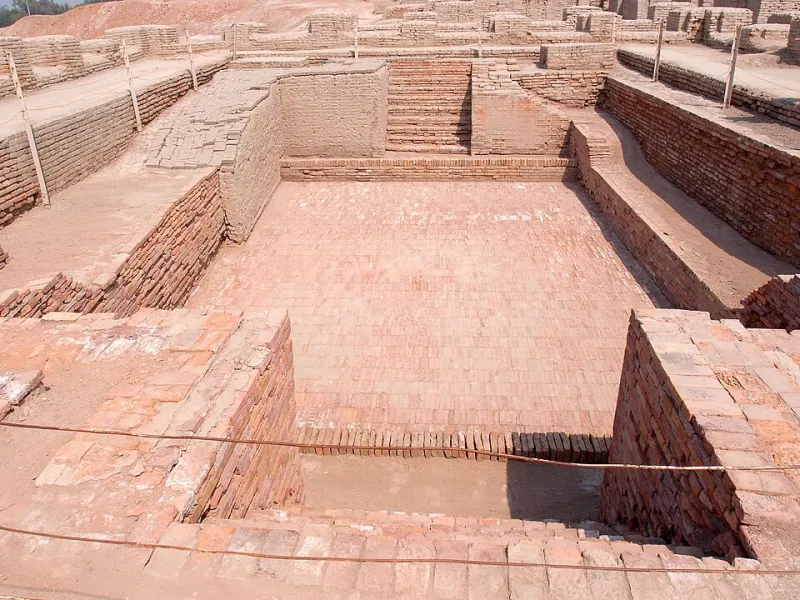
Photo: Saqib Qayyum, CC BY-SA 3.0, via Wikimedia Commons
Mohenjo-daro is often introduced as a city recovered from oblivion. The phrase is tidy, but the modern rediscovery was not. Before archaeologists recognized an Indus metropolis in the mounds of Sindh, the ruins were a resource, a landmark, and a source of puzzlement. Bricks were carted away; a Buddhist stupa crowned the citadel; surveyors and officials passed by with other priorities. What changed in the early twentieth century was not simply a new find but a new framework for interpreting what had already been seen.
For readers of Mohenjo-daro Online, that backstory is not a prelude to archaeology. It is part of the evidence. The city did not emerge from the ground all at once, neatly labeled. It was pulled into modern history through a sequence of near-misses, local knowledge, administrative curiosity, and changing methods—a sequence that still shapes how scholars read the site in 2026.
A Mound Known Before It Was Known
The idea that Mohenjo-daro was a lost city waiting for a European discoverer is misleading. Local communities knew the mounds. The name itself, often rendered as 'mound of the dead,' points to long-standing awareness of the ruins as a place of debris, brick, and memory. What was missing was not knowledge of the mound but a category for it. It was not yet an Indus city in anyone’s frame of reference.
That distinction matters. In the nineteenth century, travelers and officials in South Asia often encountered ancient remains through the lens of texts, monuments, and dynasties they already recognized. A brick mound without an obvious temple, palace, or inscription could be read as rubble, quarry, or the remnant of a later period. Mohenjo-daro’s visible Buddhist stupa on the citadel only reinforced the possibility of reading the site through a later religious monument rather than through a deeper urban past.
Bricks for the Railway
The most famous near-miss came during the railway age. In the 1850s, bricks from the ruins were reportedly removed for use as ballast during construction of the Karachi–Lahore line. The details have been repeated so often that they risk sounding like legend, but the basic lesson is not legendary: infrastructure can consume archaeology before archaeology has a name for what it is destroying.
For Mohenjo-daro, the damage was not total, but it was consequential. Baked bricks that had survived for millennia in walls and platforms were treated as raw material. Context—the relationship between one brick and another, between a floor and a drain, between a room and a street—was lost in the process. Modern archaeologists can recover a great deal from fragments, but they cannot recover everything from a wall that was dismantled for ballast.
A Stupa on the Citadel
The high mound of Mohenjo-daro carried a later Buddhist stupa, a visible monument that drew attention long before the Indus city beneath it was understood. That stupa was not a deception, but it was a distraction. It invited visitors to see a Buddhist site on a raised platform rather than an earlier urban civilization with its own logic and chronology.
Early reports and surveys therefore hovered around the mound without quite landing on the right question. The visible antiquities were real; the interpretive framework was incomplete. This is a common pattern in the history of archaeology. A site can be known, visited, and even damaged without being understood. Discovery, in the scholarly sense, begins when the evidence is forced into a new pattern.
Banerji’s Reconnaissance
The turning point came in the early 1920s. R.D. Banerji of the Archaeological Survey of India conducted reconnaissance at Mohenjo-daro in 1922, and excavations followed. The work was not a single clean breakthrough. It was part of a broader reordering of South Asian prehistory, soon linked to the excavations at Harappa and to John Marshall’s announcement in 1924 of a previously unrecognized Indus civilization.
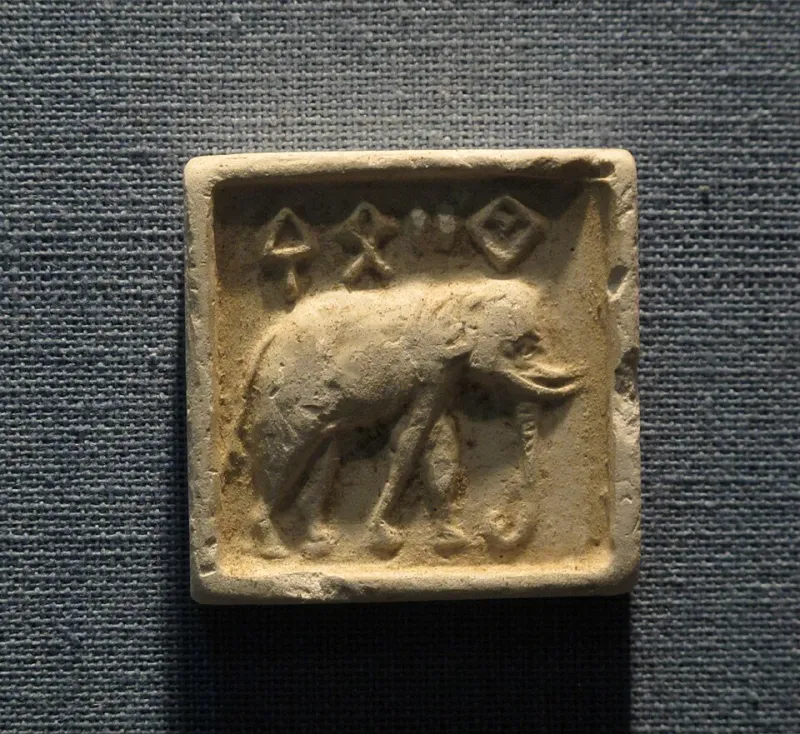
Banerji’s contribution is sometimes reduced to the moment of recognition, but the more interesting story is methodological. The excavation was conducted under colonial auspices, with assumptions and techniques that differed markedly from those of 2026. Trenches were opened, objects were recorded, and pottery and seals began to accumulate. Yet the intellectual leap depended on comparison: similar materials at Harappa, similar seals, similar urban forms. Mohenjo-daro became legible not in isolation but in relation to another site.
That relational discovery is easy to forget. A seal or a bead is not automatically an Indus artifact. It becomes one when it is placed within a system of comparable finds, dates, and settlement patterns. The early excavators were building that system as they dug.
What the First Digs Could Not See
The first generations of work at Mohenjo-daro could not see what modern archaeology can see. There was no radiocarbon dating to anchor chronology. There were no archaeobotanical laboratories to reconstruct diet from seeds and charcoal, no geophysical surveys to map buried streets before excavation, and no satellite imagery to trace ancient watercourses across the surrounding plain.
Today the site is studied through a much wider toolkit. Stratigraphy, ceramics, seal imagery, settlement layout, and environmental evidence are combined with remote sensing and geomorphology. Researchers can ask not only what was built but how the city related to the Indus River system, how neighborhoods changed over time, and how craft production and exchange were organized.
Why the Next Discovery May Be Underground
The rediscovery of Mohenjo-daro is often told as a story of luck. Luck was involved, but it was not blind. Railway construction, colonial administration, local knowledge, survey routines, and the gradual consolidation of archaeological method all shaped the outcome. A mound that might have remained a quarry became a World Heritage site because institutions eventually asked different questions of it.
That history has a forward-looking implication. Equivalent discoveries may still lie beneath the silt of the Indus plain. Not every ancient settlement has a visible stupa or a famous name. Some mounds are low, some are obscured by agriculture, and some are buried by shifts in river channels. In 2026, satellite imagery, ground-penetrating radar, and systematic surface survey make it possible to identify candidates that earlier observers might have missed.
For US readers, the story echoes the uneven recoveries of Mesa Verde and Cahokia: places known to local communities and intermittently visited by outsiders before being understood within a scholarly framework. The lesson is not that archaeology is merely luck. It is that discovery depends on who is looking, what they are looking for, and whether the methods of the moment are ready to recognize what is already underfoot.
Mohenjo-daro came back into view through ballast, a stupa, and a reconnaissance that finally asked the right questions. The city was never simply lost. It was waiting for a discipline capable of seeing it.